Poet of the Month
Julie Janson was Australian Book Review’s Poet of the Month for September 2026. Her answers to ABR’s questions are reproduced here.
Which poets have influenced you most?
I began hearing poetry as a child, with AA Milne and old Australian poets such as CJ Dennis’s The Songs of a Sentimental Bloke. My English teacher in high school would call upon me to recite sections of Dennis’s work, with its Australian slang vernacular. My parents encouraged my poetry writing from the age of nine and I loved the poetry of theatre when I went with my mother to see English style pantomimes.
My other favourite poets from an early age are Oodgeroo Noonuccal and Kevin Gilbert. I learnt about Indigenous rights and Australian history through these poems. Gilbert’s “Kiacatoo” showed us how his grandmother survived a massacre along the Lachlan River. “Letter to My Mother” by Eva Johnson breaks my heart with its personal story of stolen children.
I also love the Australian Islamic poets: Omar Sakr, Omar Musa, and Sara M Saleh. They open my mind to a multicultural world and respect for Middle Eastern poetry. I am in awe of their dignified rage and emotional response to immense ongoing suffering.
Are poems chiefly inspired or crafted?
The craft is important, and I would not be the poet, playwright or novelist without my nine years of university. Thank you to the Labor Party for my Teachers’ College Scholarship and later in my creative life to the Australia Council for the Arts.
What prompts a new poem?
A sudden impulse that is very personal and overwhelming can bring a poem into my head.
What circumstances are ideal for writing poetry?
A quiet, peaceful country setting and time to dream the poem up from the subconscious.
Roughly how many drafts do you produce before finishing a poem?
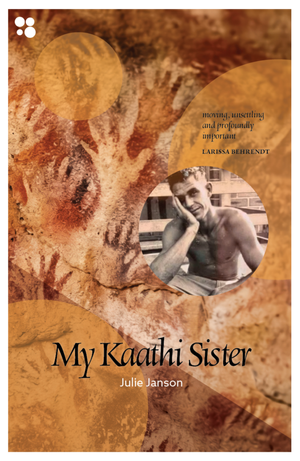
It might be five drafts but some poems grow from experiences of fifty years ago. My poem “My Kaathi Sister” sprung from a tumultuous year spent on the Darling River Aboriginal Reserve in 1972.
I also much appreciate the wise editing by Five Islands Press: Steve Meyrick and Mark Tredinnick.
Which poet would you most like to talk to, and why?
John Keats, because at twenty years of age I was in love with him.
Do you have a favourite Australian poetry collection?
Love Songs of Arnhem Land by Ronald Berndt, a translation of ritual bungal djama songs from the Yolngu people, 1976.
The sound of talking flies from among the branches, drifting like the cry of the Morning Pigeon …
Hear the sound of their speech, now fast, now slow, twisting their tongues, like birds …
What do poets need most: solitude or coterie?
Solitude is wonderful but the company of other writers and a good husband are also excellent.
Who are the poetry critics you most admire?
Evelyn Araluen, Tony Hughes-d’Aeth, Judith Beveridge, Yumna Kassab, Michael Mohammed Ahmad.
If Plato allowed you to keep one poem or poetry collection in his Republic, what would it be?
Eva Johnson’s “Letter to My Mother”.
What is your favourite line of poetry?
“Shall I compare thee to a summer’s day?” by William Shakespeare.
How can we inspire greater regard for poetry among readers?
I admire the influence of outstanding teachers, families and children’s story writers and how they can open a child’s mind to the music of poetry. My daughter-in-law has taught my two-year-old grandson to recite poems by Shakespeare, and that is wonderful!